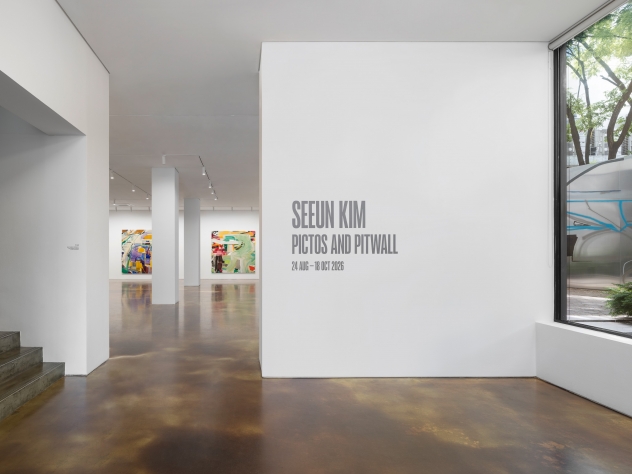
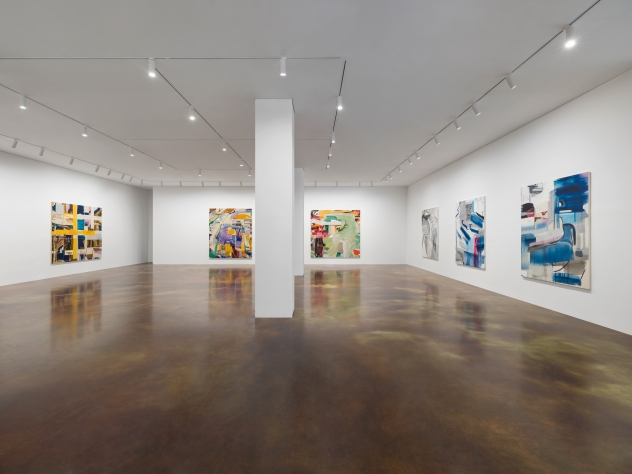
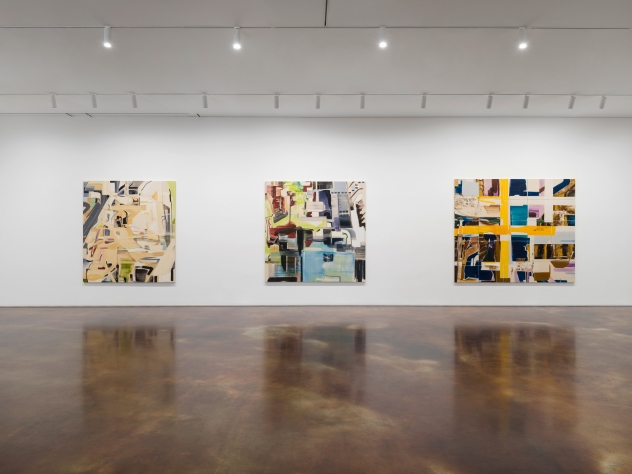
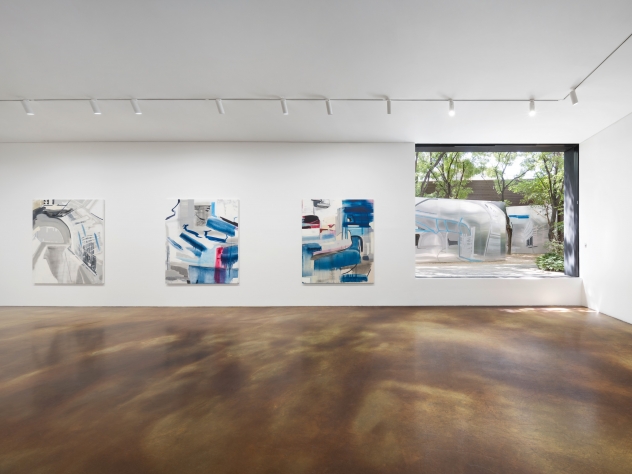
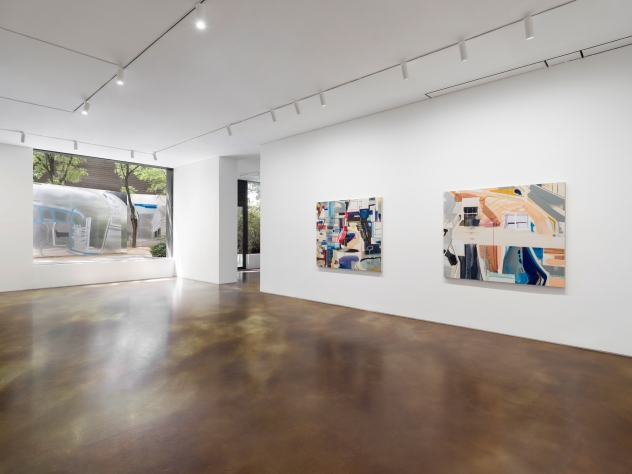
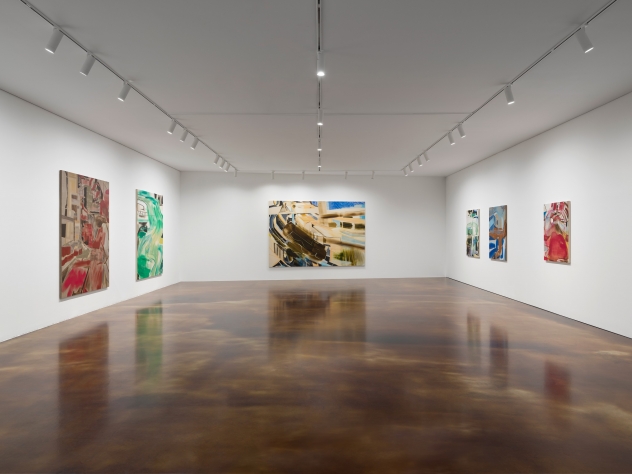
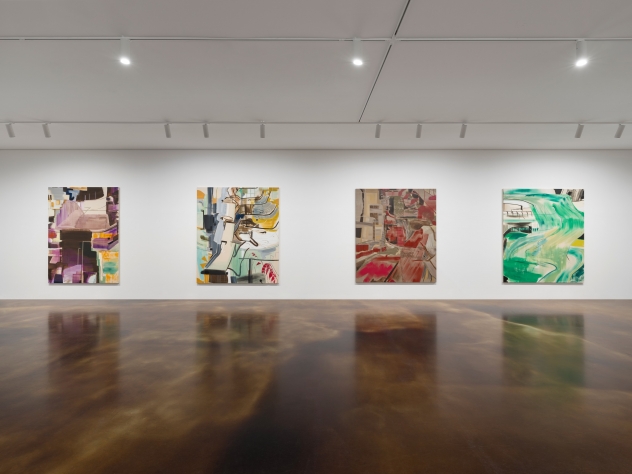
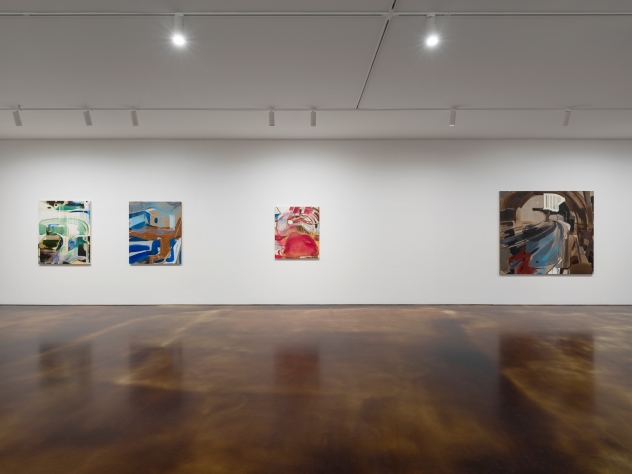
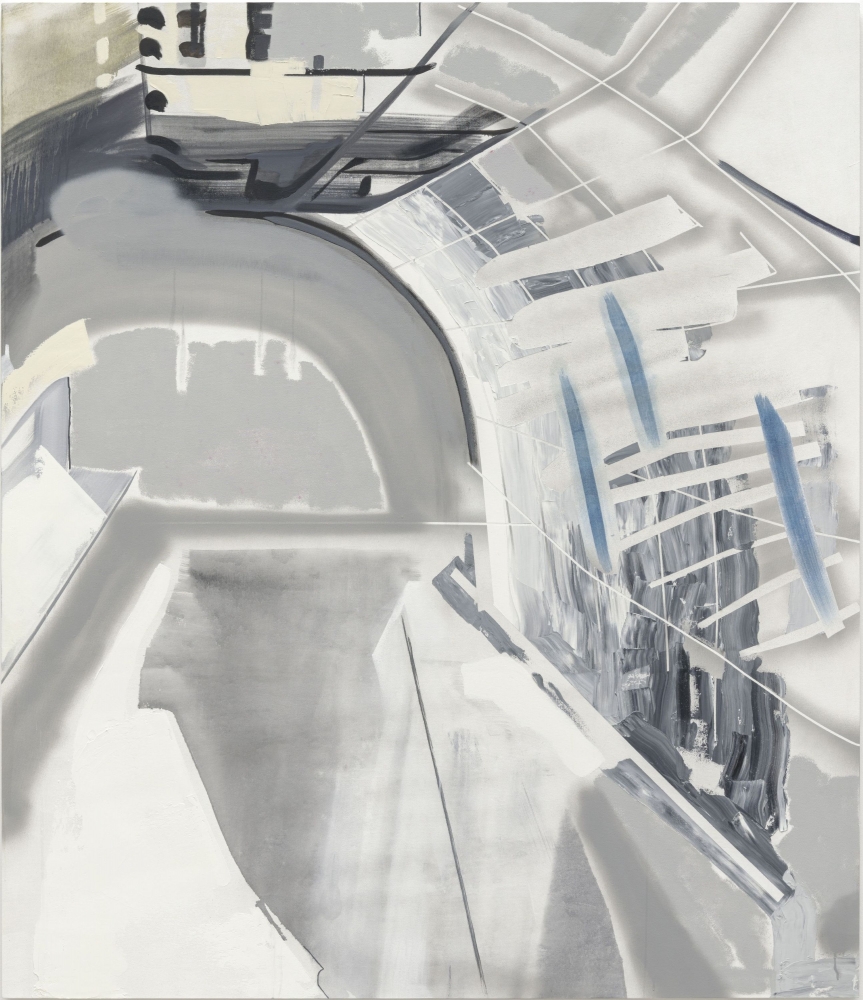
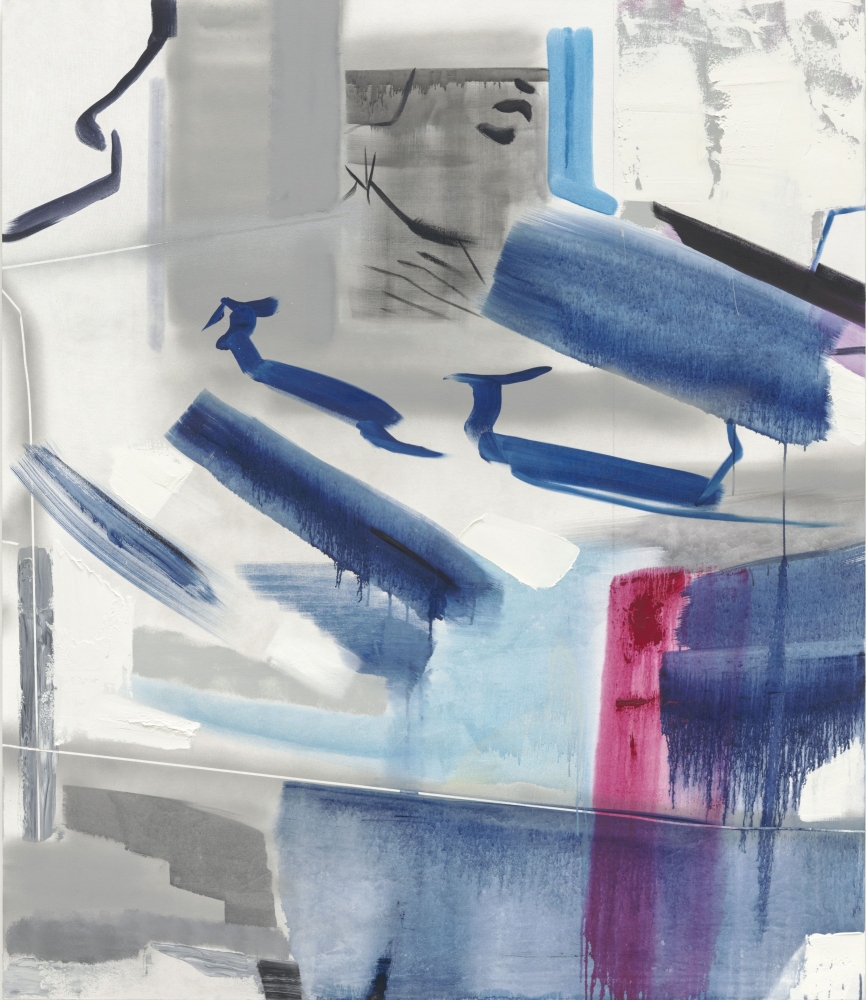
Kukje Gallery is pleased to present Pictos and Pitwall, a solo exhibition by Seeun Kim, from August 24 through October 18, 2026. Kim focuses on the various systems and rules within our built urban spaces that continuously renew themselves, independent of the speed at which an individual’s mind and body react. The artist composes these environments into painting through the “body that paints,” reconstructing the shifting states of the city in compositions that are both sensory and opaque. The term “pit wall” in the exhibition title refers to the command center that evaluates situations and directs strategies in real time during an F1 race, while “picto”—abbreviated from pictogram—evokes the visual language that transmits these bits of compressed information in ways that constitute a basic language. Centering on these two motifs, Kim conceives the gallery space—from the second floor to the first floor of K2 and into the outdoor garden—to visualize the individual’s response to information.
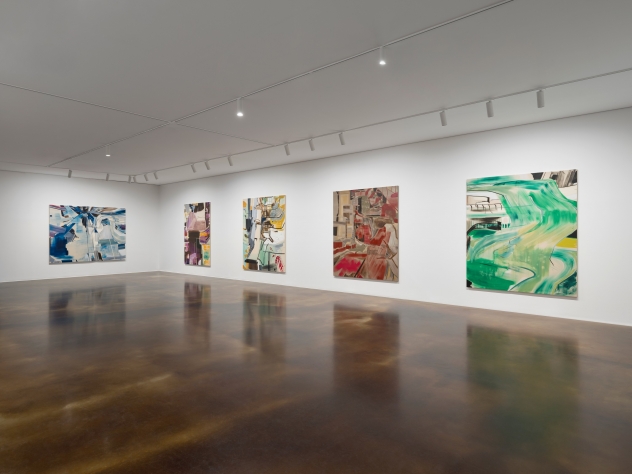
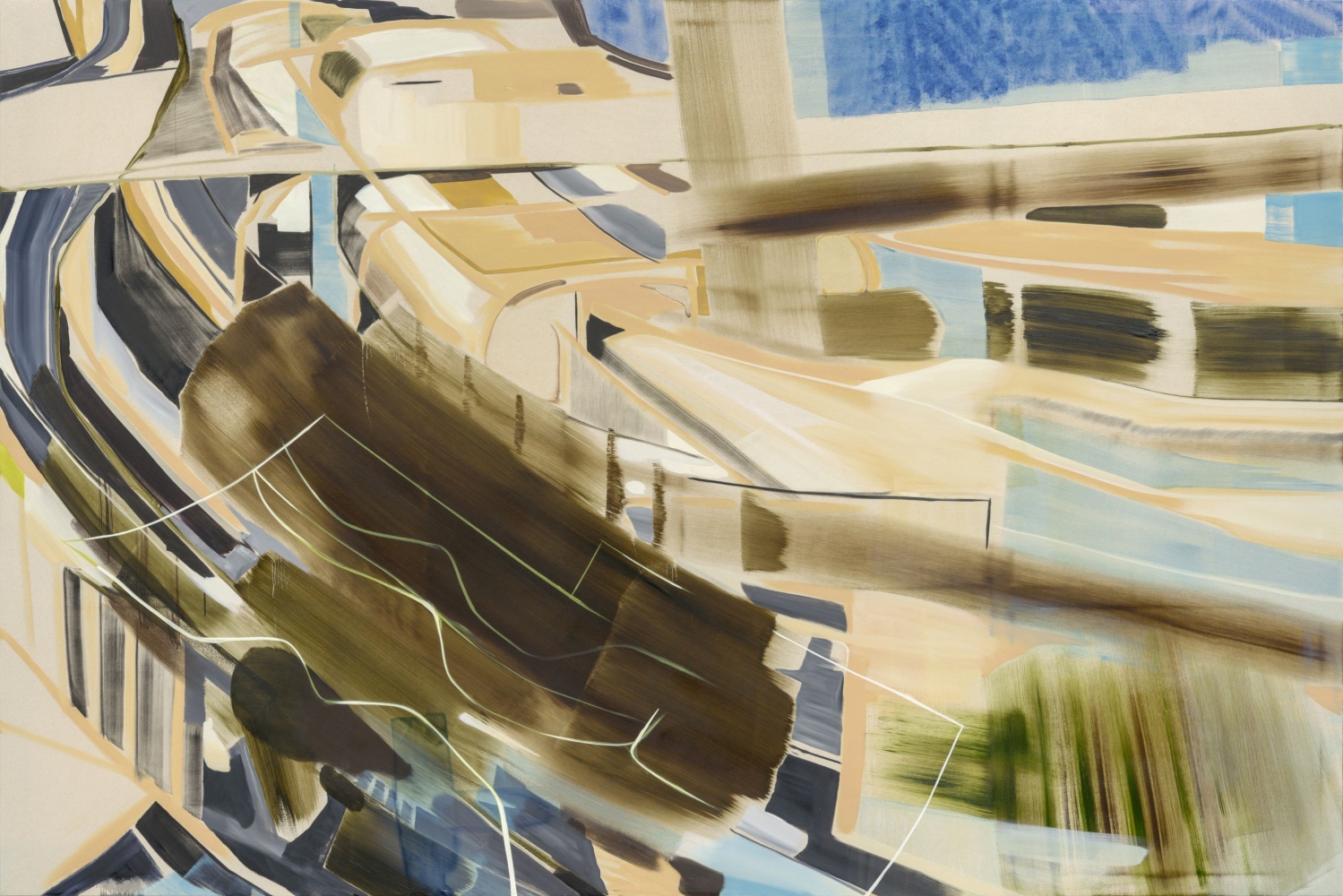
The second floor of K2 is devoted to works that collect and process information about the changing city. Various images that capture different aspects of the city—including maps, live traffic camera feeds, and photographs—are interwoven into a singular system of control. By connecting indirectly collected social data with her personal experience, the artist seeks to interpret today’s rapidly changing urban landscapes. Installed on the wall facing the entrance, Oksu (2026) originates from a photograph of Oksu Station received from the artist’s acquaintance. The earth-tone ventilation system that cuts across the painting, along with the adjacent green zone evokes Kim’s memory of a vacant plot of land in a park in Bundang that she encountered in childhood. Born in 1989 and raised during the full-scale development of Bundang New Town, the artist has long observed how urban planning and development radically alter the environment. The unnamed landscapes encountered by the artist are thus linked to the present through accumulated memories and experiences, prompting an exploration of how one senses their own position within change.
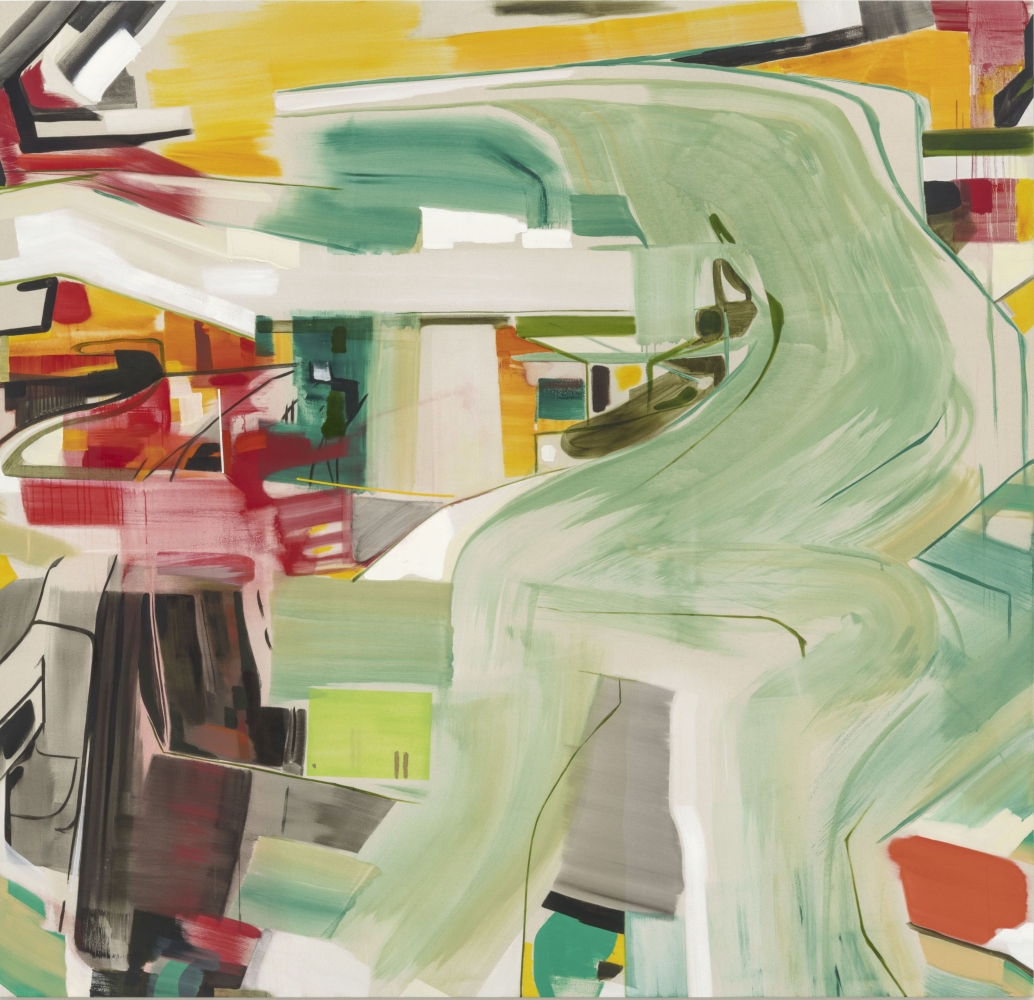
This haptic exploration is anchored primarily in the artist’s own body. Depicting her transit route between home and the studio, Framed eyes (2026) comprises scenes captured by live traffic cameras. As an expansion of our field of vision, these scenes enable a more expansive understanding of the city’s incessant reorganization, allowing for observations beyond human perception. In this way, Kim collects information on the urban environment in a “state” yet to be named, continuously selecting and assessing these data while reorienting her position within the landscape.
For Kim, a sense of location is not merely about situating oneself, but a means of understanding the relationship between the physical body and its surrounding environment within a shifting milieu. The artist recalls, for instance, the experience of taking the Eurotunnel LeShuttle to cross the Strait of Dover with a vehicle. Just as one might perceive their own stationary car as moving while cognitively knowing it is being transported by a larger train, sensing the present is a process constituted jointly by the body and the mind, rather than by observed motion alone.
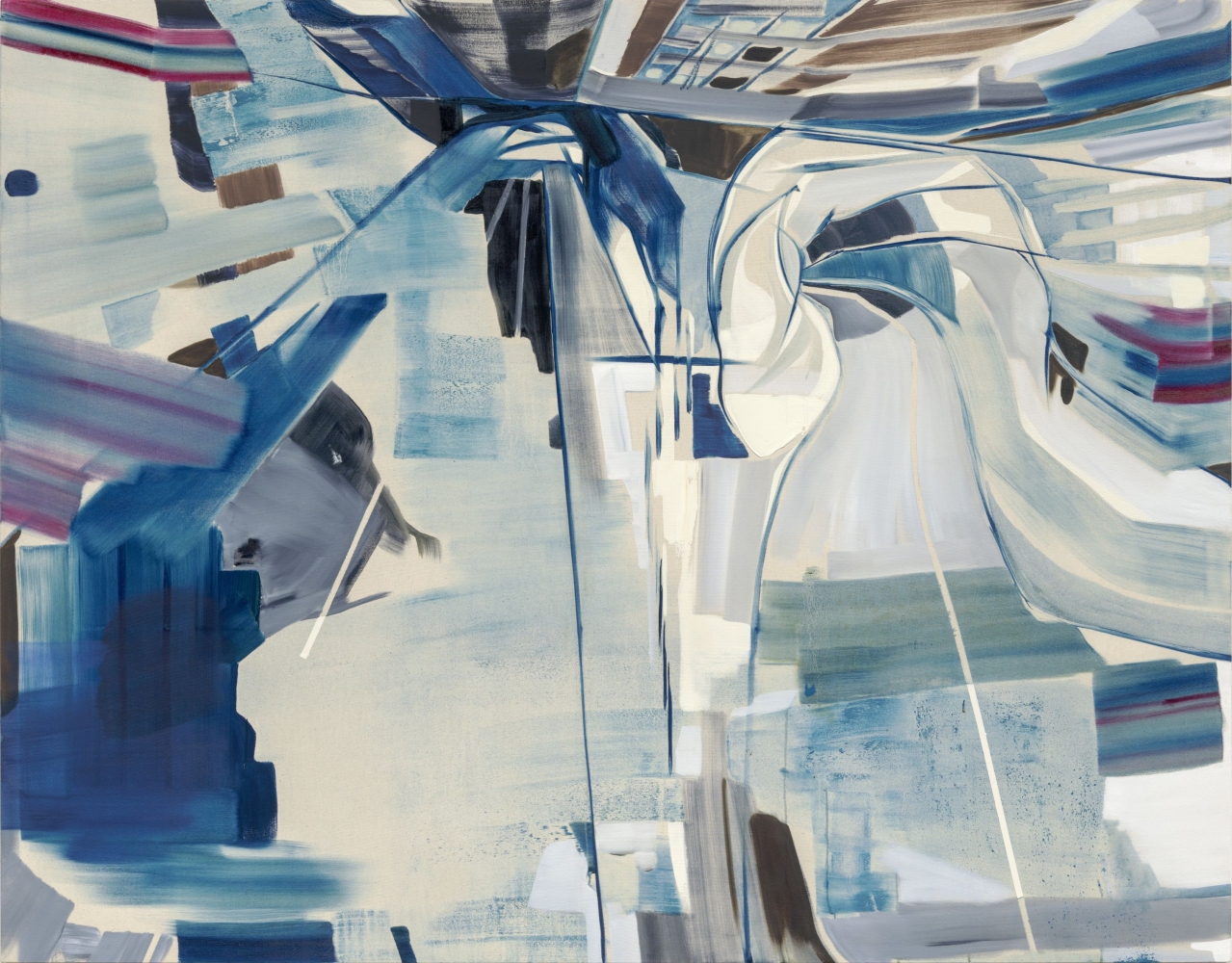
This gestalt experience can be glimpsed in the paintings on the first floor, which capture the artist’s personal experience of landscapes undergoing transformation. Port the bridge (2026) captures a bridge beyond an airport, with the old roads beneath it being dismantled and rebuilt. These two spaces, where connection and separation intersect while retaining the spatial characteristics of a transit hub, provide a direct experience of the urban phenomenon of continuous production and collapse. Transposing this multi-dimensional information onto the two-dimensional plane, Kim presents it as a scene grounded in spatial perception. This formal reconfiguration continues in the Tunnel mural series. Unfolding the interior of a tunnel—a space that only permits forward movement—across three canvases, Kim transfigures the space restricted to linear movement through the body’s layered perception of spatial depth. Through this method, she expands the embodied experience formed within a closed structure through painting, offering an alternative way of sensing space.
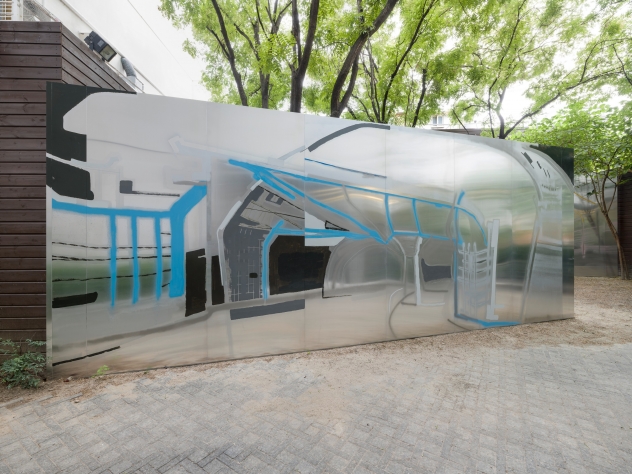
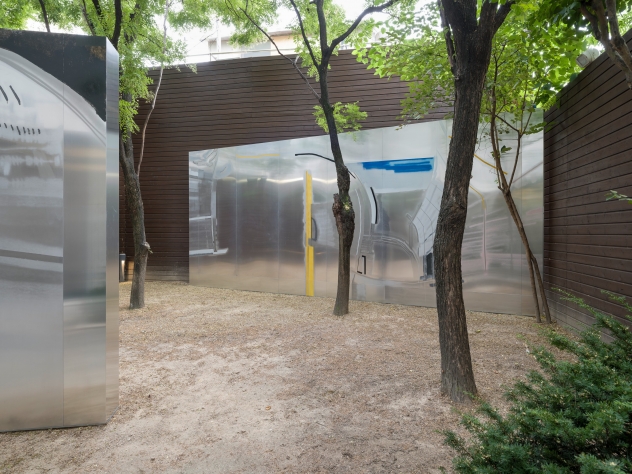
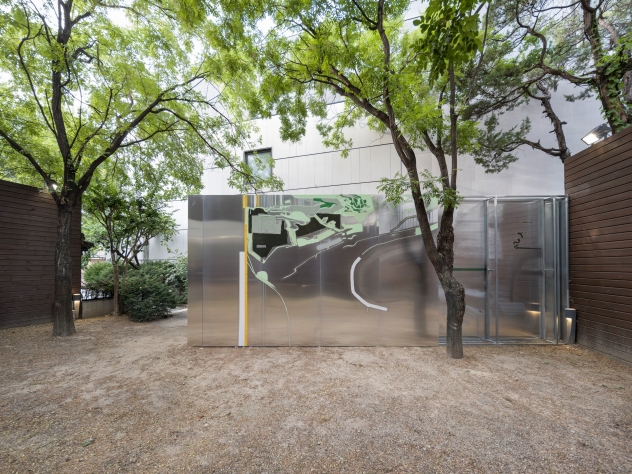
In the courtyard outside the K2 building, Kim extends her exploration of the senses of the distance between the city and the body across the walls. Viewers encounter the images previously experienced indoors in the outdoor courtyard, where they experience them anew in a three-dimensional setting and become more physically conscious of the space they currently inhabit. For example, the interiors of the tunnels previously unfolded across the flat planes are transformed into two aluminum murals, Tunnel mural-Pit calls wall (2026), highlighting Kim’s focus on how the constructed landscape operates and is defined by its site. This spatial transformation links to the artist’s methodology of investigating the relationship between painting and the body. By modulating the scale of the canvas, Kim creates unfamiliar physical conditions and traces the resulting shifts in perception. Ultimately, Kim proposes a kind of “pit wall” enabling individuals inundated with data and choices to pause, sense, and assess their own positions.
About the Artist
Seeun Kim (b.1989) earned a BFA in painting at Ewha Womans University and an MA in painting at the Royal College of Art. Major solo exhibitions include Pit Calls Wall, Museumhead, Seoul (2025); Pit Stop, DOOSAN Gallery, Seoul (2022); Submersible, Kumho Museum of Art, Seoul (2020); PITMAN’S CHOICE, ONE AND J. Gallery, Seoul (2019); and Potholing, Marlborough Gallery, London (2018), among others. Kim has also participated in numerous group exhibitions including Figuration Circuits: Dong-A Art Festival and Its Era, Ilmin Museum of Art, Seoul (2025); Next Painting: As We Are, Kukje Gallery, Seoul (2025); Derby Match: Watchman and Spy, Museumhead, Seoul (2023); The Poetic Collection, Seoul Museum of Art, Seoul (2022); DOOSAN ART LAB 2021, DOOSAN Gallery, Seoul (2021); ONE-A-DAY, Art Sonje Center, Seoul (2018); and I Love You, I Love You Not, HITE Collection, Seoul (2017). Selected awards include the Porsche Frontier Prize at the 4th Seoul Arts Awards (2026), Kumho Young Artist (2020), and The Valerie Beston Artists’ Trust Prize (2017). She has participated in international residency programs including the International Studio & Curatorial Program (ISCP) in New York (2023), SeMA Nanji Residency (2022), and MMCA Residency Goyang (2020). Her works are held in permanent collections of major public institutions, such as the Seoul Museum of Art and the MMCA Art Bank.