

News
November 2026
Artists Represented by Kukje Gallery Participate in Art between Korea and Japan since 1945 Held at MMCA, Gwacheon
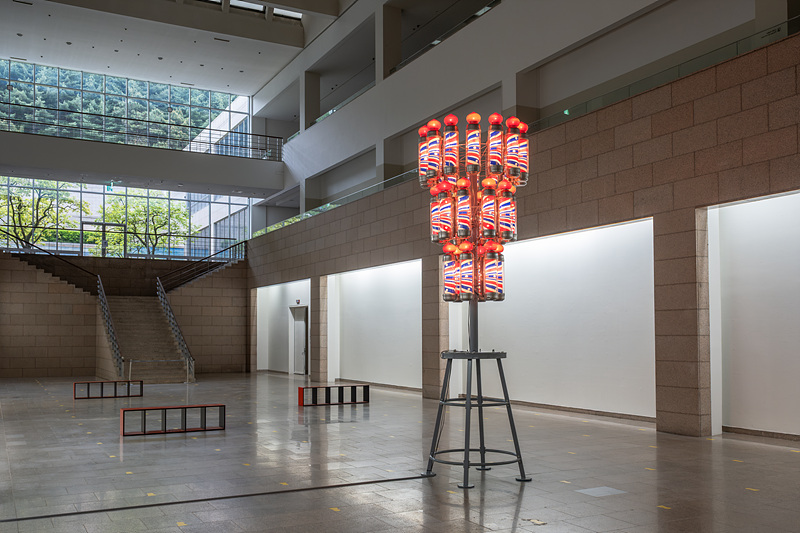
Artists: 권영우, 박서보, 이우환, 정연두, 하종현(Kwon Young-Woo, Park Seo-Bo, Lee Ufan, Yeondoo Jung, Ha Chong-Hyun)
Dates: May 14 – September 27, 2026
Venue: 국립현대미술관 과천관(National Museum of Modern and Contemporary Art, Gwacheon, Korea)
Website: https://www.mmca.go.kr/exhibitions/exhibitionsDetail.do?exhFlag=3&exhId=202408210001821
Dates: May 14 – September 27, 2026
Venue: 국립현대미술관 과천관(National Museum of Modern and Contemporary Art, Gwacheon, Korea)
Website: https://www.mmca.go.kr/exhibitions/exhibitionsDetail.do?exhFlag=3&exhId=202408210001821
Renowned Korean modern and contemporary artists Kwon Young-Woo, Park Seo-Bo, Lee Ufan, Yeondoo Jung, and Ha Chong-Hyun participated in the group exhibition Art between Korea and Japan since 1945 held at the National Museum of Modern and Contemporary Art (MMCA) in Gwacheon, Korea. Co-organized by the MMCA and the Yokohama Museum of Art to mark the 60th anniversary of the normalization of diplomatic relations between South Korea and Japan, the exhibition revisited 80 years of enduring cross-border artistic exchange sustained despite the two countries’ complex history.
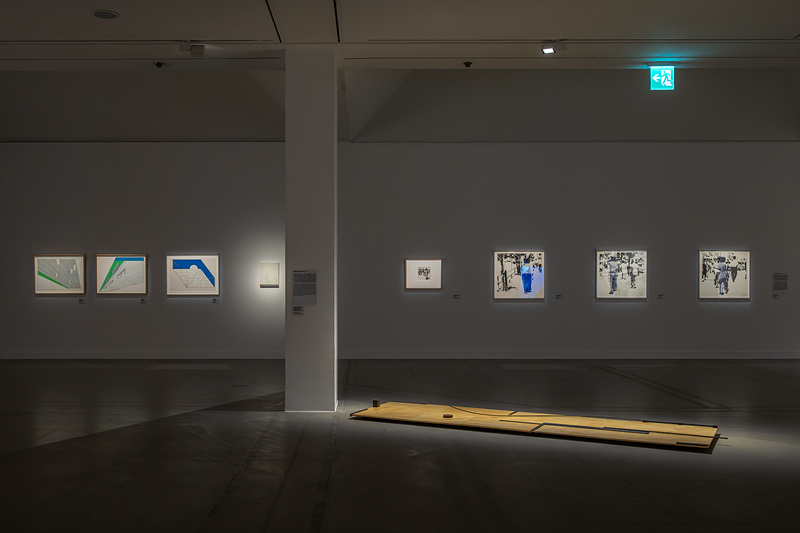
Spanning five chronological sections, the exhibition presented approximately 200 works by 43 artists and collectives from both nations. It traced the intersections of Korean and Japanese art against key historical milestones—such as Korea’s liberation and Japan’s defeat in 1945, as well as the 1965 diplomatic normalization. Beyond official institutional exhibitions, it tracked multifaceted channels of interaction, including personal networks, informal contacts, and acts of collective solidarity, framing the artists’ transnational journeys as a vivid, multi-layered narrative akin to a “road movie.”
The opening section, “Art Between the Borders: The Perspectives of Zainichi Koreans,” retraced the trajectories of Korean artists who remained in Japan following liberation, examining their historical context through contemporary artworks alongside previously unreleased archival materials. The second section, “Nam June Paik and Japanese Artists,” centered on Paik’s pioneering satellite projects and technical and artistic collaborations with Japanese artists from the 1960s onward.
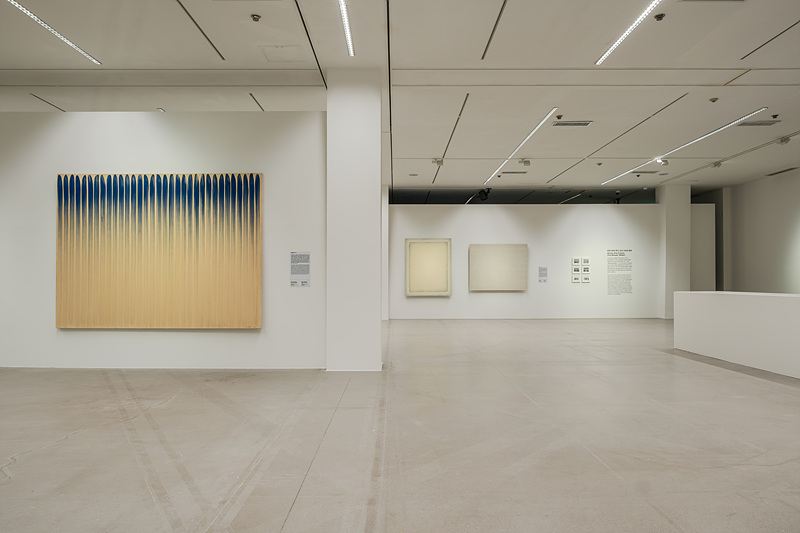
The third section, “A Broadened Path: Korea-Japan Relations after the Normalization,” charted the artistic exchanges between South Korea and Japan following the 1965 normalization of diplomatic relations. Notably, works by artists of Japan's Mono-ha movement were juxtaposed with Lee Ufan’s acclaimed From Line series—underscoring Lee’s pivotal role in bridging contemporary art across both countries and reflecting the close ties of the era. This section also brought together Park Seo-Bo’s Hereditarius 1-68 (1968) with 1960s–70s early works by Kwon Young-Woo and Ha Chong-Hyun, capturing a dynamic period in which Korean contemporary art actively forged its own identity.
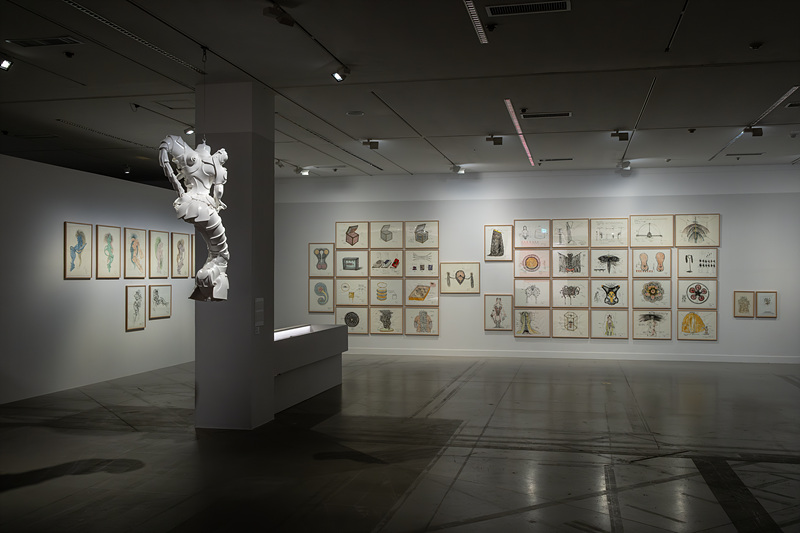
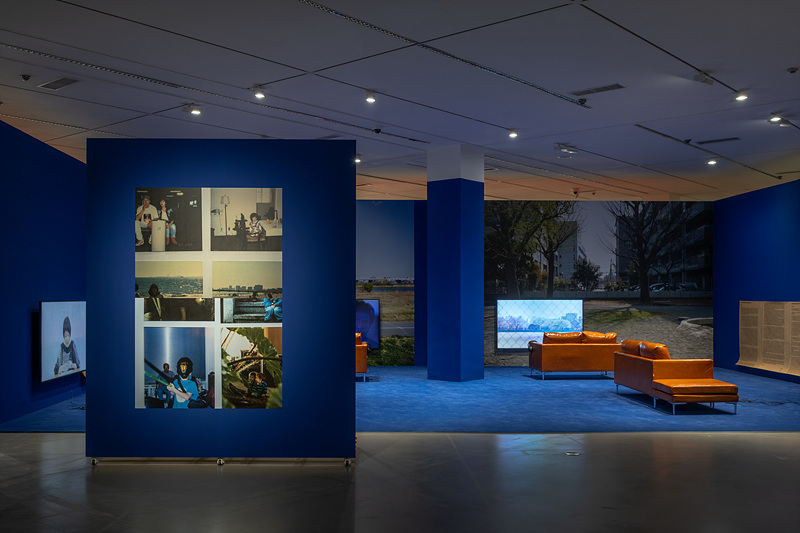
The fourth and fifth sections—“Art of a New Generation in a Period of Transformation” and “Living Together: Solidarity Beyond Art”—turned their focus to evolving relationships and shared solidarity between the two nations. Tracing collaborative initiatives back to the group exhibition MUSEUM (1987), which brought together young Japanese artists alongside Korean figures such as Koh Nakbeom and Lee Bul, the works chronicled how post-2000s Korean and Japanese artists have engaged with shared historical issues, trauma, and solidarity. A notable highlight was Yeondoo Jung’s A Walk with a Magician (2014), which stood in solidarity with the suffering of others by documenting the lives of Japanese citizens affected by the 2011 Great East Japan Earthquake, offering a multifaceted record of peaceful coexistence through art.
Furthermore, this presentation highlighted how the opening of the MMCA in Gwacheon in 1986 served as a catalyst for artistic exchange, by featuring seven outdoor sculptures by artists who were active in Japan at the time—including Lee Ufan’s From Four Directions (1985), which was originally installed for the museum’s inauguration. Following its presentation in Japan last year, the exhibition at MMCA Gwacheon closed on September 27.
국제갤러리 작가들, 국립현대미술관 과천 단체전 《로드 무비: 1945년 이후 한·일 미술》 참여
한국 근현대미술을 대표하는 작가 권영우, 박서보, 이우환, 정연두, 하종현이 국립현대미술관 과천관에서 열렸던 단체전 《로드 무비: 1945년 이후 한·일 미술》에 참여했다. 한·일 국교 정상화 60주년을 기념하여 국립현대미술관과 일본 요코하마미술관이 공동으로 주최한 이번 전시는 복잡한 역사 속에서도 지속된 양국 미술 교류 80년의 흔적을 재조명했다.
이번 전시는 한국과 일본 작가 43명(팀)의 작품 200여 점을 다섯 개의 섹션에 걸쳐 연대기순으로 소개했다. 1945년 광복과 패전, 1965년 한·일 국교 정상화 등 주요 역사적 기점을 배경으로 양국 미술의 교차 양상을 조명했다. 공식 전시 외에도 개인적 네트워크와 비공식적 접촉, 연대 활동 등 다각적인 교류의 흔적을 추적하며, 격변하는 시대 속에서 국경을 넘나든 예술가들의 여정을 한 편의 ‘로드 무비’처럼 입체적으로 보여주었다.
전시의 첫 번째 섹션인 ‘사이에서: 재일조선인의 시선’은 해방 후 일본에 남아 활동한 재일조선인 미술가들의 궤적을 조명하며, 미공개 자료와 현대 작가의 작품을 통해 그들의 역사적 조건을 살폈다. 두 번째 섹션 ‘백남준과 일본 예술가들’에서는 백남준을 중심으로 1960년대부터 이어진 일본 예술가들과의 기술적·예술적 협업 및 위성 프로젝트 등 시대를 넘나드는 교류 과정을 소개했다.
세 번째 섹션인 ‘넓어진 길’에서는 1965년 국교 정상화 이후 한·일 미술 교류가 정착되는 과정을 다루었다. 특히 양국의 현대미술을 잇는 핵심 인물인 이우환의 〈선으로부터〉 연작을 포함하여 일본 모노하(Mono-ha) 작가들의 작품을 나란히 배치해 당시의 긴밀한 교류의 현장을 보여주었다. 또한, 같은 섹션에서 박서보의 〈유전질(遺傳質) 1-68〉(1968)과 더불어 권영우, 하종현의 1960–70년대 초기작을 함께 소개해 한국 현대미술이 정체성을 확립해 나가던 역동적인 시기를 조망했다.
네 번째 섹션 ‘새로운 세대, 새로운 관계’와 다섯 번째 섹션 ‘함께 살아가다: 예술 너머의 연대’는 양국 사이에 전개된 새로운 관계와 연대에 주목했다. 특히 1987년 당시 일본 청년 작가들과 고낙범, 이불 등이 참여한 《뮤지엄(MUSEUM)》 단체전을 통한 협업 사례를 시작으로, 2000년대 이후 한·일 미술가들이 서로의 역사적 문제와 고통을 어떻게 마주하고 연대했는지를 보여주는 작품들로 구성되었다. 특히 2011년 동일본 대지진을 겪은 일본인의 삶을 기록하며 타자의 고통과 연대한 정연두의 작업 〈마술사와의 산책〉(2014) 등 양국 작가들이 예술로 공존해 온 다층적인 기록을 펼쳐 보였다.
특히 이번 전시에서는 1986년 국립현대미술관 과천 개관 당시 설치된 이우환의 〈사방에서〉(1985) 등 재일미술가의 야외 조각 일곱 점을 조각공원에 공개하며 과천관 개관이 한·일 미술 교류 확장의 계기가 되었음을 조명했다. 작년 일본 전시에 이어 한국에서 개최된 이번 전시는 지난 9월 27일 막을 내렸다.
[Source: MMCA press release and exhibition brochure]
